
When the sculptural work Future Memory Tricycle, modeled after the “Shin-chan’s Tricycle” exhibited at the Hiroshima Peace Memorial Museum, was permanently installed at the International Red Cross and Red Crescent Museum in Geneva, the Future Memory team finally met the now-elderly family of little Shin-chan for the first time.
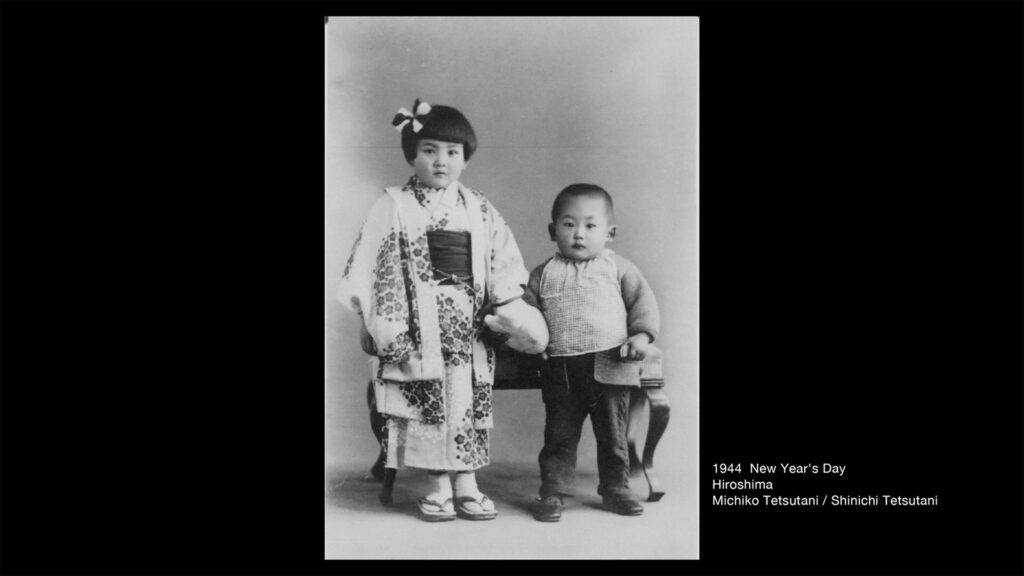
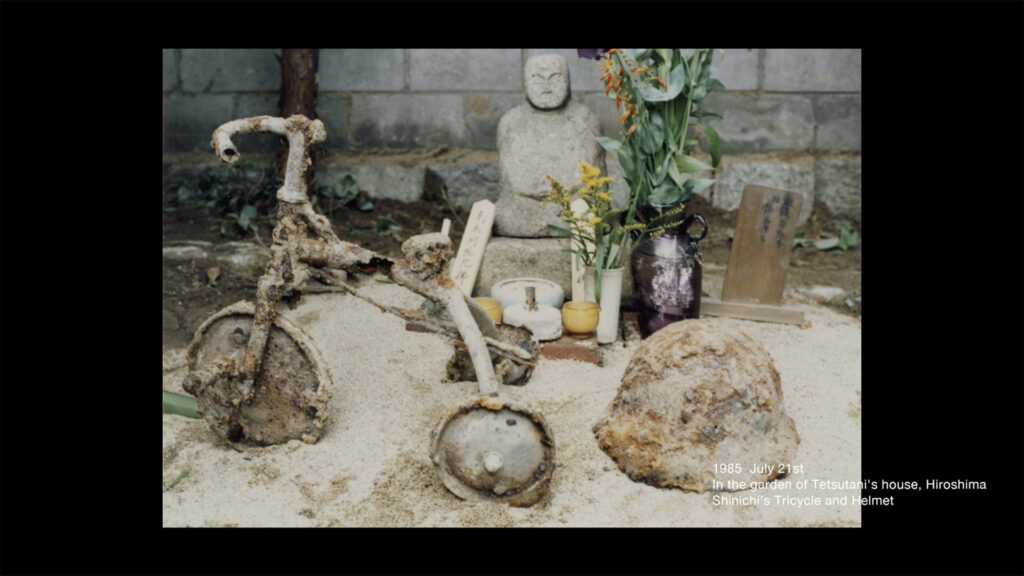
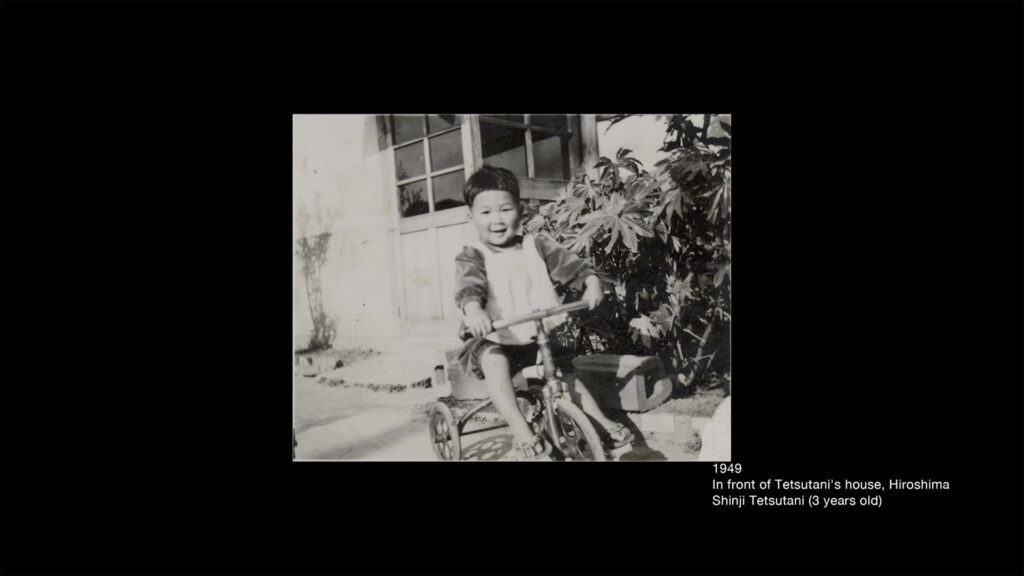
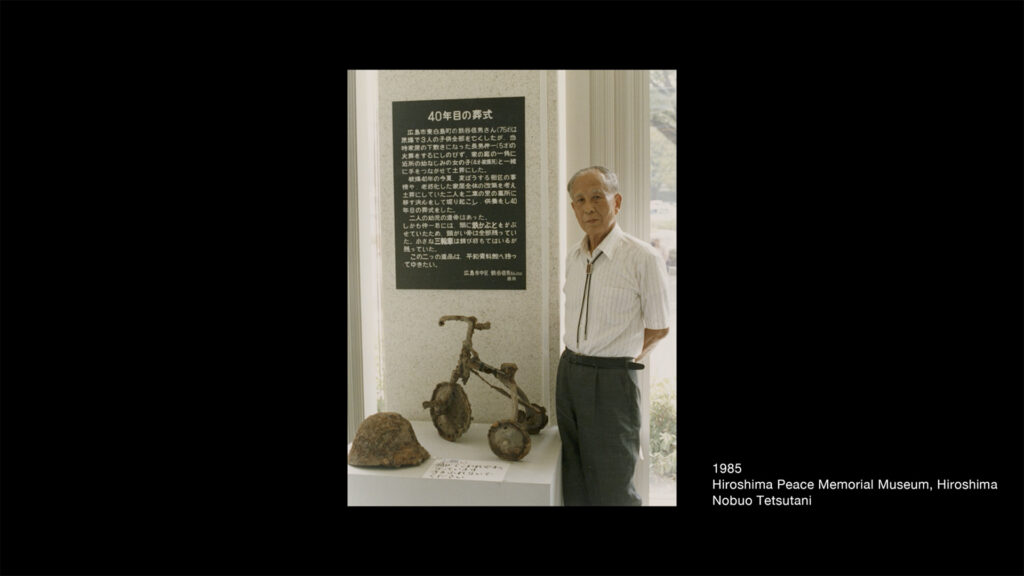
I had long known the story: that the tricycle of three-year-old Shin-chan, who perished in the atomic bombing, had been buried in the backyard together with his small body, and that forty years later, in 1985, it was unearthed and donated to the Peace Memorial Museum. Yet until that day, the family had never spoken publicly about the circumstances surrounding it.
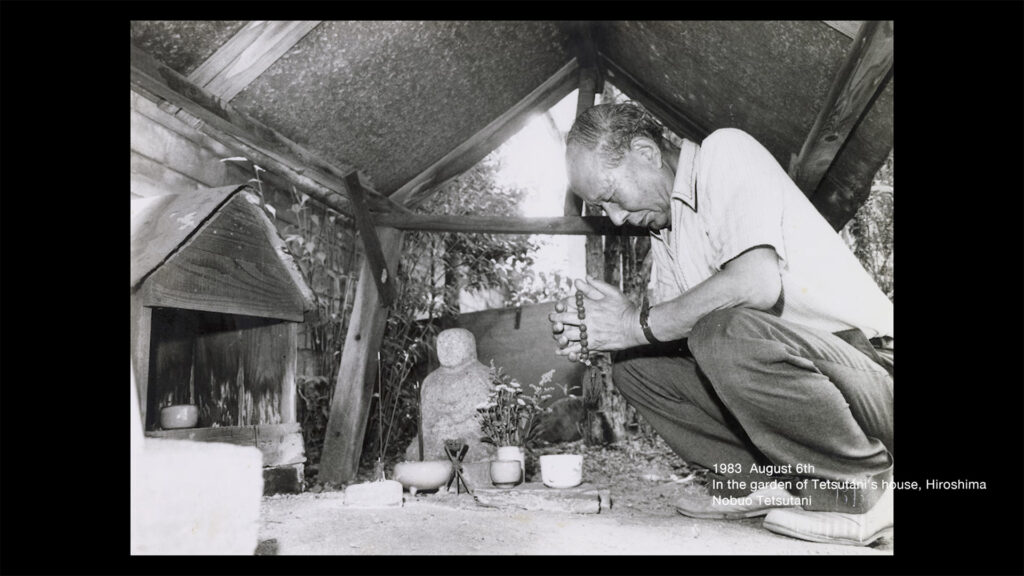
After Shin-chan’s death—his body covered in terrible burns—his parents could not bring themselves to cremate him. They dug deeper into an air-raid shelter pit and buried him together with his tricycle. For the grieving parents, it was perhaps an act of love: a wish that their little boy could go on playing forever. Among the ashes of Hiroshima’s ruins, the father found a small stone Jizō statue whose face reminded him of Shin-chan. He placed it in the backyard and prayed before it every morning and evening. Yet he never spoke of his lost child to the sons born after the war. The depth of that silent grief could only be imagined from the sight of his back as he prayed.
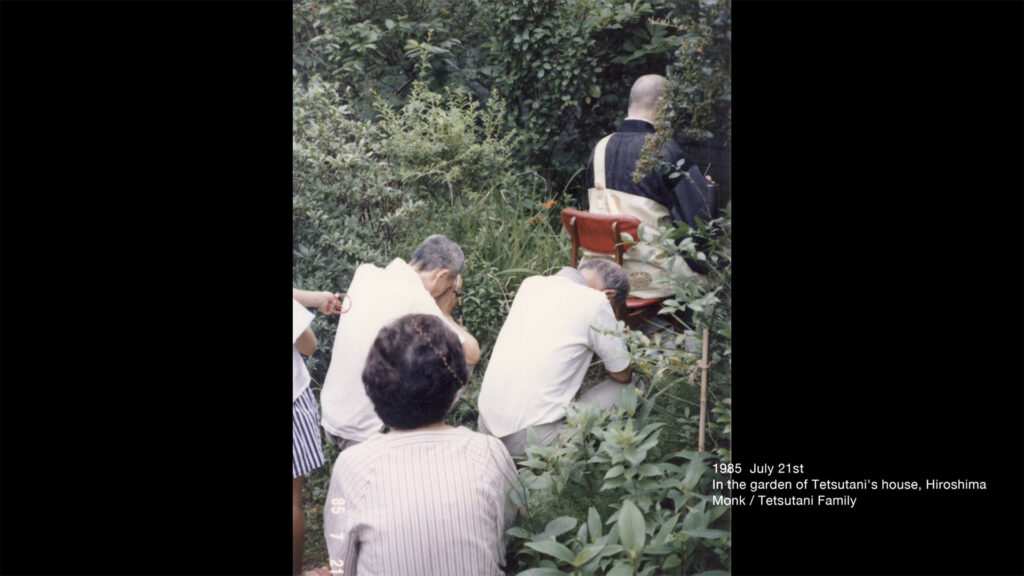
Four decades later, the sons—having grown up watching their parents’ quiet devotion—decided it was time. “You have prayed long enough,” they said. “Let’s bring Shin-chan properly to his grave.” A priest who attended told them, “After forty years, there may be no bones left. If you find something white in the soil, gather it gently as his remains.” As they carefully dug, small white bones began to emerge. Then, a rusted army helmet appeared. Their father had placed it over his son’s face so that no dirt would touch it. When he lifted the helmet, inside was a small, pure white skull. Beneath it, tree roots had grown—cradling it like a pillow.
The father whispered, “Stop digging. Let’s pray.”
In that moment, he heard his son’s voice:
“Daddy, you’ve grown old.”
It was the first time he had ever spoken about his lost child.
After forty long years of silence, Shin-chan had finally come home.
This family’s story remained untold—locked in silence for another thirty-nine years—until they stood before the reborn bronze tricycle and began to speak. The story that had remained untold was entrusted to us.What message does it carry? “Future Memory” has long sought to express loss—of life, of form—by transforming memory into art. Now, a new mission has emerged: to reveal what was not lost, to give form to that which endures within the human spirit, no matter what is taken away.
広島平和記念資料館の「伸ちゃんの三輪車」を象った彫刻作品『Future Memory Tricycle』がジュネーヴの赤十字博物館で恒久展示されることになり、年老いた伸ちゃんの家族と初めて会うことができた。
三歳で原爆により亡くなった伸ちゃん。その亡骸が三輪車とともに裏庭に埋められ、四十年後の1985年に掘り起こされて資料館に寄贈されたことは、広く知られている。しかしその背後にあった家族の痛みと祈りの物語は、これまで語られることがなかった。今回、家族の方が静かにその経緯を訥々と語ってくださった。
大火傷を負って息を引き取った伸ちゃんを、両親は荼毘に付すことができず、防空壕の穴をさらに掘って三輪車と共に埋めた。――せめて、いつまでも三輪車で遊んでいてほしい。そんな思いが込められていたのだろう。焼け跡で拾ったお地蔵さまに我が子の面影を見た父は、それを裏庭に据え、毎朝毎晩手を合わせ続けた。父は戦後に生まれた息子たちに、亡き子のことを一言も語らなかった。祈る背中に滲んでいた悲しみの深さは、想像を超えていた。
40年の歳月が過ぎる頃、親の痛みを見て育った息子たちは、もう十分に拝んだ、ちゃんとお墓に入れてあげよう、と伸ちゃんの亡骸を掘り起こし、埋葬することになった。立ち会った僧侶は、3歳の子供でもう40年も立っているから骨が残っていないかもしれない、土の中で白く残っているものが出てきたら、それを遺骨として集めましょう、と語っていた。少しづつ土を堀起こしていくとやがて、小さな白骨が現れてきた。細心の注意を払って土をどけていくと、鉄兜が現れた。埋葬の際、顔に土がかかるのがかわいそうだと、父が被せていたものだ。その鉄兜を静かに取ってみるとその中にはきれいな白いされこうべがあった。その首のしたには木の根が張っており、まるで枕をして眠っているようだった。
父はみんなに、手を止めて拝もう、と言った。
その時、父には伸ちゃんの声が聞こえたという。
「お父ちゃん、年取ったなあ」
亡くした子のことを一言も語らなかった父が初めて言った言葉だった。
40年間眠り続けていた伸ちゃんは、こうして家族の元にもどってきた。
この家族の物語は誰にも語られることなく「Untold」のまま、また39年の時が経っていた。新たに生まれ変わった三輪車の彫像を見て、家族だけが知っていた物語を語ってくれた。「Untold」だった物語は我々に託された。そこにはどのようなメッセージがあるだろうか。失われた生命や形を、記憶を手がかりに再び立ち上げてきた「Future Memory」に、新たな使命が加わった。それは、どんな悲劇の中でも決して失われない「人間の心」を表現し、未来へと手渡していくことだろう。
CREDIT
UNTOLD – Future Memory Tricycle
size : 1920 x1080 pixel / 02:36
material : mp4 movie data
year : 2024
artist : Cannon Hersey / Akira Fujimoto
Photo courtesy : Shinji Tetsutani